The short version
- Sleep hygiene is a set of habits and conditions that help you fall asleep and wake up rested. There is no single standard — sources list anywhere from five to twenty rules.
- Evening light delays melatonin production in almost everyone. Even regular room light before bed can shorten your melatonin window by about 90 minutes.
- Caffeine disrupts sleep even when you drink it six hours before bedtime. Alcohol damages REM sleep at low doses — around two standard drinks.
- Keep your bedroom cool (63–70 °F / 17–21 °C): in a warm room, total sleep time and sleep efficiency drop measurably.
- Sleep hygiene helps most people sleep better — but for chronic insomnia it isn’t enough on its own. That requires cognitive behavioral therapy.
What is sleep hygiene
Sleep hygiene is the collection of habits and environmental conditions that make it easier to fall asleep and stay asleep. The term dates to the 1970s, but there is still no agreed-upon definition. A review of 548 studies found that only 44% of them even explained what they meant by the term [1]. Most lists combine behavioral factors (caffeine, alcohol, exercise, sleep timing) with environmental factors (light, temperature, noise) and principles around bed use.
Across those 548 studies, caffeine was the most frequently studied component, appearing in 51% of papers. Next came alcohol and exercise at 46% each, sleep timing at 45%, and light at 42% [1]. That spread explains why different sources give you different lists.
Sleep hygiene is not a treatment. It is the foundation — a set of baseline conditions without which other approaches work less well. If sleep problems have been going on for more than three months and happen nearly every night, habits alone are unlikely to fix it. More on that below.
Light and darkness: the main lever
Your body’s internal clock responds to light more than to anything else. Evening light delays melatonin production — the hormone that signals it is time to sleep. In a study with 116 healthy adults, ordinary room light before bed suppressed melatonin onset in 99% of participants, and shortened the total melatonin window by about 90 minutes compared to dim light conditions [2].
Backlit screens work the same way. In a controlled experiment, participants who read on a light-emitting device before bed took longer to fall asleep, felt less sleepy in the evening, and reported lower alertness the next morning compared to those who read a printed book [3]. For a closer look at whether it is the light or the scrolling that does more damage, see our article on phone before bed.
What to do in practice:
- Two hours before bed, dim the lights and switch to warm-toned lamps. Bright overhead lighting in the evening is not ideal.
- Screens: if you can’t put them away, lower the brightness as much as possible and enable a warm color mode.
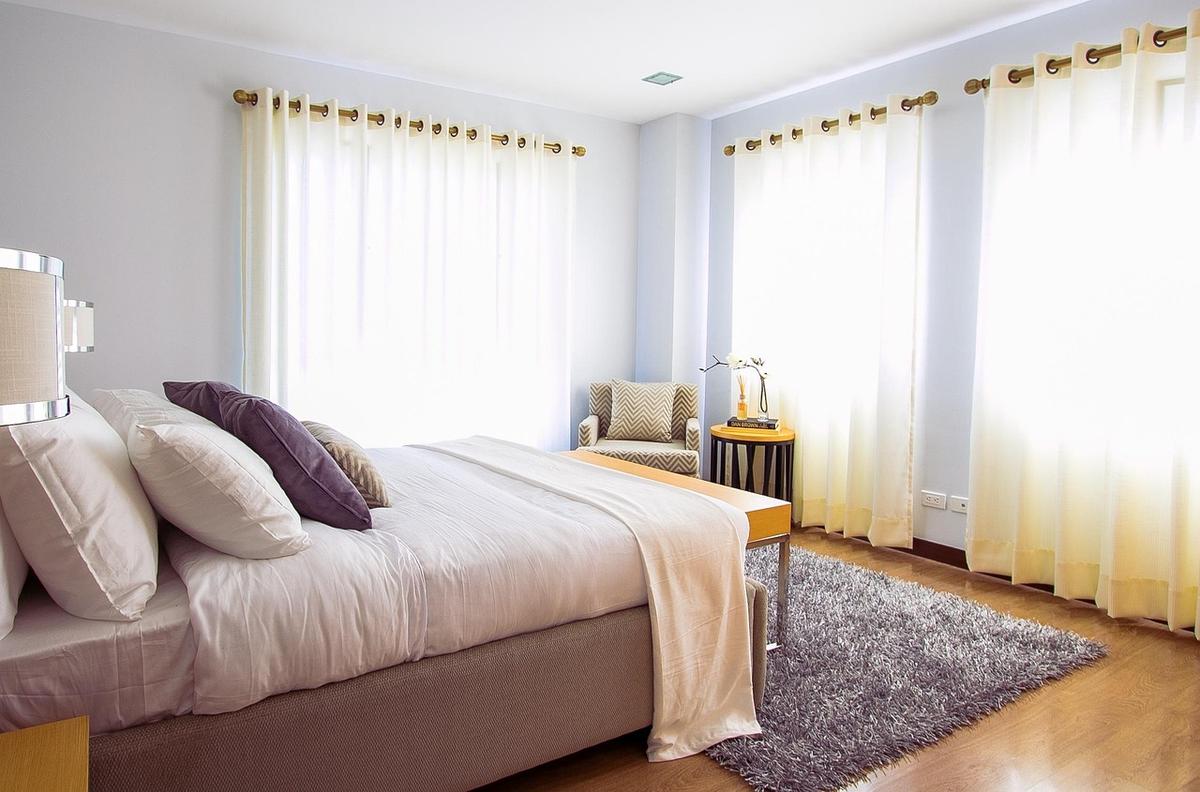
- At night, make your bedroom as dark as you can: blackout curtains or a sleep mask. Even small light sources interfere with sleep.
- In the morning, do the opposite: get as much natural light as you can in the first hour after waking. It synchronizes your internal clock and makes it easier to wake up.
For a full approach to light management and fixing your sleep schedule, see how to fix your sleep schedule.
Temperature and air quality
Your body falls asleep more easily when its core temperature drops slightly. That is why a cool bedroom is one of the fundamentals of sleep hygiene. In an experiment with older adults, raising bedroom temperature from 27 °C (81 °F) to 30 °C (86 °F) reduced total sleep time by about 26 minutes, lowered sleep efficiency by 5.5%, and increased time awake by 27 minutes [4].
Too cold is a problem too. In a survey of adults in Japan, people who always felt cold in their bedroom scored 2.25 points higher on the PSQI sleep quality scale (higher means worse sleep) than those who didn’t feel cold [5]. A comfortable range, used in the Sleep Reset program, is 63–70 °F (17–21 °C) with humidity around 30–50%.
Air quality also matters. In one experiment, reducing carbon dioxide levels in the bedroom significantly improved sleep quality and next-day cognitive performance [6]. Ventilating before bed is one of the simplest ways to lower CO2.
If you don’t have air conditioning, airing out the room for 15–20 minutes before bed helps. Wearing socks can warm your feet, which speeds heat loss from the skin and may make it slightly easier to fall asleep.
Quiet and noise
Your brain keeps listening while you sleep. Sudden, uneven sounds — a door slamming, a motorcycle outside, a phone notification — can cause micro-awakenings. You won’t remember them, but your sleep gets lighter and you wake up feeling less rested.
What helps:
- Earplugs. The simplest fix, and the Sleep Reset program recommends them too: earplugs block outside noise that disrupts deep sleep. If they feel strange at first, try a few types — soft foam, silicone, or wax.
- A steady background sound. A fan, white noise, or pink noise masks sudden sounds through the wall. Keep the volume low, about the level of a whisper. How to pick a sound — in our article on white noise for sleep.
- Your phone. Put it on silent or leave it in another room: vibrations and notification lights can wake you up, too.
If the noise is constant — neighbors, traffic, a partner’s snoring — tackle it separately: heavy curtains, window seals, another room on rough nights. Loud snoring with pauses in breathing is a reason to talk to a doctor; more on that below.
Caffeine, alcohol, and other habits
Caffeine. It stays in your system longer than most people expect. In a controlled study, 400 mg of caffeine — about two to three cups of strong coffee — disrupted sleep even when taken six hours before bed [7]. If falling asleep is hard for you, cutting off caffeine after noon is worth trying. Don’t forget tea, energy drinks, and soda — they all contain caffeine too.
Alcohol. Many people use it to unwind before bed, but it works against sleep. A meta-analysis of 27 studies found that alcohol disrupted REM sleep even at low doses — around two standard drinks — and the disruption worsened with higher intake [8]. REM sleep is when your brain processes emotions and consolidates memory, so this matters.
Exercise. Regular physical activity improves sleep quality. The one caveat is that intense exercise late in the evening can be stimulating for some people and push back sleep onset. Morning or early afternoon workouts tend to be more reliable.
Food. A heavy meal or a lot of sugar close to bedtime puts extra strain on digestion and can cause nighttime awakenings. The Sleep Reset program recommends finishing dinner three to four hours before bed and avoiding sweets late in the evening.
Evening routine and stimulus control
The brain learns from sequences. If you go through the same routine before bed every night, the brain starts associating that chain of signals with sleep. This is the core of stimulus control — one of the most evidence-based techniques for sleep difficulties. After a few weeks of consistent repetition, drowsiness starts to arrive at the beginning of the routine itself.
A warm bath or shower one to two hours before bed is a well-supported option. A meta-analysis of 17 studies found that water at 104–108 °F (40–42.5 °C) for as little as 10 minutes significantly shortened the time it took to fall asleep and improved self-reported sleep quality [9]. The mechanism is straightforward: after the shower, the body quickly loses heat through the skin, core temperature dips slightly, and that drop signals sleep.
Another core principle: use your bed only for sleep and sex. Working from bed, scrolling on your phone in bed, or watching shows in bed trains the brain to associate the bed with alertness rather than sleep. That association makes it harder to wind down.
What you include in your evening routine is up to you — a shower, light reading, breathing exercises, or a short meditation. The articles on breathing exercises for sleep and meditation for sleep walk through what works and how to start in ten minutes.
Consistent wake time
Sleep hygiene rules work better when you have a consistent wake time. Not bedtime — wake time. That is the anchor for your internal clock. The Sleep Reset program starts here too: the same wake time every day, including weekends.
If your sleep has been off for a while, or if falling asleep has been consistently hard, start here. For a detailed guide on shifting your schedule, finding the right wake time, and getting through the first few rough days, see how to fix your sleep schedule.
When sleep hygiene isn’t enough
Sleep hygiene rules help with situational sleep problems — stress, a disrupted schedule, a new environment. But when the problem has been going on for more than three months and happens almost every night, that is chronic insomnia. At that point, habits alone are not going to fix it.
The American Academy of Sleep Medicine specifically recommends against using sleep hygiene as the sole treatment for chronic insomnia [10]. The first-line recommendation is cognitive behavioral therapy for insomnia (CBT-I). In a meta-analysis of 241 trials involving 31,452 participants, CBT-I was the most effective treatment, while sleep hygiene education added little as a standalone component [11].
That doesn’t make sleep hygiene useless — it creates the conditions under which other approaches work better. But if your habits are already solid and sleep is still poor, it’s worth getting help. For more on chronic insomnia and what actually works, see insomnia: causes and what helps.
When to see a specialist
Talk to a doctor if:
- you have trouble falling or staying asleep three or more nights a week for several months;
- a bed partner notices loud snoring or breathing pauses during sleep — this may be sleep apnea;
- your legs feel restless or uncomfortable in the evenings and it interferes with falling asleep;
- you feel very hard to stay awake during the day despite getting what should be enough sleep;
- insomnia appeared alongside anxiety, low mood, or other symptoms.
Sleep apnea, restless legs syndrome, and chronic insomnia all require more than habit changes — they need a diagnosis first. If you experience chest pain or difficulty breathing, call emergency services.
The Sleep Reset program
Sleep Reset is a seven-day practice program. The introductory session covers five baseline sleep hygiene rules: evening eating habits, darkness and reduced brightness, a cool bedroom, quiet, and using the bed for sleep only. You can start applying these before the program even begins — and it will already make a difference.
On the first night, there is a breathing practice using the left nostril — a technique that activates the parasympathetic nervous system. On the seventh night, the practice focuses on building a sensory routine before bed: temperature, posture, scent, sound, a particular way of breathing — a chain of signals the brain will learn to recognize as the cue for sleep.
The LU app also includes breathing exercises, guided meditations, and a sleep diary tracking energy levels and awakenings. Free to try.
Sources
- De Pasquale C. et al. Sleep hygiene - What do we mean? A bibliographic review. Sleep Medicine Reviews, 2024.
- Gooley J. J. et al. Exposure to room light before bedtime suppresses melatonin onset and shortens melatonin duration in humans. Journal of Clinical Endocrinology and Metabolism, 2011.
- Chang A. M. et al. Evening use of light-emitting eReaders negatively affects sleep, circadian timing, and next-morning alertness. Proceedings of the National Academy of Sciences, 2015.
- Yan Y. et al. Experimental study of the negative effects of raised bedroom temperature and reduced ventilation on the sleep quality of elderly subjects. Indoor Air, 2022.
- Chimed-Ochir O. et al. Perception of feeling cold in the bedroom and sleep quality. Nagoya Journal of Medical Science, 2021.
- Strøm-Tejsen P. et al. The effects of bedroom air quality on sleep and next-day performance. Indoor Air, 2016.
- Drake C. et al. Caffeine effects on sleep taken 0, 3, or 6 hours before going to bed. Journal of Clinical Sleep Medicine, 2013.
- Gardiner C. et al. The effect of alcohol on subsequent sleep in healthy adults: A systematic review and meta-analysis. Sleep Medicine Reviews, 2025.
- Haghayegh S. et al. Before-bedtime passive body heating by warm shower or bath to improve sleep: A systematic review and meta-analysis. Sleep Medicine Reviews, 2019.
- Edinger J. D. et al. Behavioral and psychological treatments for chronic insomnia disorder in adults: an American Academy of Sleep Medicine clinical practice guideline. Journal of Clinical Sleep Medicine, 2021.
- Furukawa Y. et al. Components and Delivery Formats of Cognitive Behavioral Therapy for Chronic Insomnia in Adults: A Systematic Review and Component Network Meta-Analysis. JAMA Psychiatry, 2024.